New AI product development
Turn a validated use case into a production-ready AI product.
Deliverable: product discovery, MVP scope, architecture, engineering, and launch plan.
Best for teams that need a working product, not a prototype on the shelf.
AI product engineering
Build AI products that create real business value
JetRuby builds production-ready AI products and adds AI capabilities to existing software, from discovery and prototype to deployment and support. The work covers product design, data assessment, model or LLM integration, engineering, evaluation, and production monitoring. We define the scope around your business workflow, data, integrations, and measurable outcomes.
From discovery and prototype to production support
40
apps modernized, Fortune 500 insurer
300+
engineers
250+
clients
45M+
gem downloads
15+
years
Clutch 4.9
(36 reviews)
Services
Pick the service that matches where your AI initiative stands today. Our AI software development services cover the path from a validated use case to a product in production.
Turn a validated use case into a production-ready AI product.
Deliverable: product discovery, MVP scope, architecture, engineering, and launch plan.
Best for teams that need a working product, not a prototype on the shelf.
Build bespoke AI applications around your data, workflows, and user roles.
Deliverable: custom application logic, integrations, and interfaces.
Best when off-the-shelf tools do not fit your data or process.
Applications powered by large language models.
Deliverable: prompt and orchestration layer, model integration, evaluation set, and production safeguards. For teams seeking a generative AI development company: chat, summarization, and Q&A over your content.
Connect models to your documents, databases, and internal knowledge.
Deliverable: retrieval pipeline, vector search, access controls, and answer quality evaluation.
Best when people lose hours searching documents, tickets, or wikis.
AI agents that handle multi-step tasks inside business processes.
Deliverable: agent logic, tool integrations, human review points, and fallbacks.
Best for repeatable processes where a person approves the outcome. Read our enterprise AI agents guide.
Add AI features to an existing product through APIs and model services.
Deliverable: integration assessment, staged rollout, observability, and rollback plan.
Best when your product has users and you want one new AI capability.
Prepare data, manage models, and keep AI reliable in production.
Deliverable: data pipelines, monitoring, retraining, and ongoing care.
Best when a live AI system must stay accurate as data changes.
Solutions
A helper inside the tools your team or customers already use. It answers questions and handles routine steps, with controlled access to company knowledge and tools.
A routine process that runs from request to result and pauses for a person where a decision matters. Your team reviews outcomes, not every step.
An employee asks in plain words and gets an answer with a link to the source, instead of searching files, tickets, and wikis.
Incoming documents, emails, and messages arrive sorted, summarized, and with key fields already pulled out, so people start from a clean list.
An AI feature inside the normal screens of a product your customers already use, on web, mobile, or inside your company.
Where to start
Discovery defines the use case and success metrics. A feasibility check shows what your data supports, a prototype tests the riskiest assumptions, and the MVP is a working, scalable first version. Each step ends with a decision.
Assess your architecture, data access, performance, and security constraints. Then release in stages, add observability, define rollback, and iterate on production feedback. LLM integration is a systems architecture problem, not just an API call: see our article on LLM integration architecture.
If your main need is integrating AI and ML into existing business systems, see our AI and ML integration services.
Method
On a small team, one person often combines several of the roles named below.
Define the user problem, business outcome, and acceptance criteria.
Result. A use case document with agreed success metrics.
Your role. The product owner sets the business goal and decides what counts as success.
Review data quality, permissions, coverage, privacy, and update frequency.
Result. A written feasibility assessment: what your data allows and what it does not.
Your role. The data owner provides access and data origins; security reviews privacy and permissions.
Test the highest-risk assumptions — output quality, latency, integration feasibility, unit economics.
Result. A working prototype and a findings report recommending whether to proceed, adjust, or reduce scope.
Your role. Product and data owners review the findings and decide whether to continue.
Design the user experience, system architecture, and integration points.
Result. Approved screen designs and flows, plus an architecture document your own engineers can review.
Your role. The product owner approves the flows; your IT owners confirm integration points and security requirements.
Build the application, model or LLM layer, data pipelines, and integrations.
Result. Access to a working build in a test environment, updated at each iteration.
Your role. The product owner reviews each iteration; your IT team provides access to systems and environments.
Define evaluation sets, test model and application behavior, address security and reliability. LLM systems need output scoring alongside unit tests.
Result. A test and evaluation report and a risk list with a plan for each risk.
Your role. Security reviews the findings; the product owner signs off on the quality thresholds.
Release to production with observability, model monitoring, cost and latency controls, and fallback behavior.
Result. The product live in production, with monitoring your team can access.
Your role. The product owner approves the launch plan; operations and security confirm access, alerting, and responsibilities.
Maintain the application, data pipelines, and models, and improve the product using real usage data.
Result. A support plan and a prioritized backlog of improvements.
Your role. The product owner prioritizes improvements; the data owner flags changes in the source data.
Industries

We build AI for financial products: fraud detection, compliance automation, and personalization, with ML models for transaction scoring and dispute routing. AI solutions for fintech.

We build AI for healthcare products: triage bots, automated scribing, and smart scheduling that extend each clinician’s reach. AI solutions for healthcare.

We build AI for logistics software: smart dispatch and fleet and fuel monitoring that bring telematics, tank-level sensors, and ERP data into one control center. AI solutions for logistics.

We build AI and IoT platforms for agritech that turn sensor and lab data into recommendations for production teams, as in our Digital Winery case below. AI solutions for agritech.
Case studies
Challenge. Modernizing 40 legacy enterprise applications for a Fortune 500 insurer, where every change to fragile legacy code risked breaking integrations and business logic.
Solution. AI-assisted refactoring at the code and architecture levels, with business logic and integrations reconstructed and preserved during migration, and structured documentation generated as part of the process.

Result. 40 enterprise applications modernized by a 15-engineer team, with about 6 months of total transformation time and 100% on-time delivery. Business logic and dependencies were fully preserved.
Challenge. Winemakers worked from spreadsheets, paper logs, and ad-hoc processes, which led to inconsistent quality, slow decisions, and little visibility into production.
Solution. JetRuby built a web-based platform that streams sensor data from tanks and production environments, applies AI to predict fermentation behavior and flag quality anomalies, and automates tasks and work orders for vineyard, cellar, and lab teams.
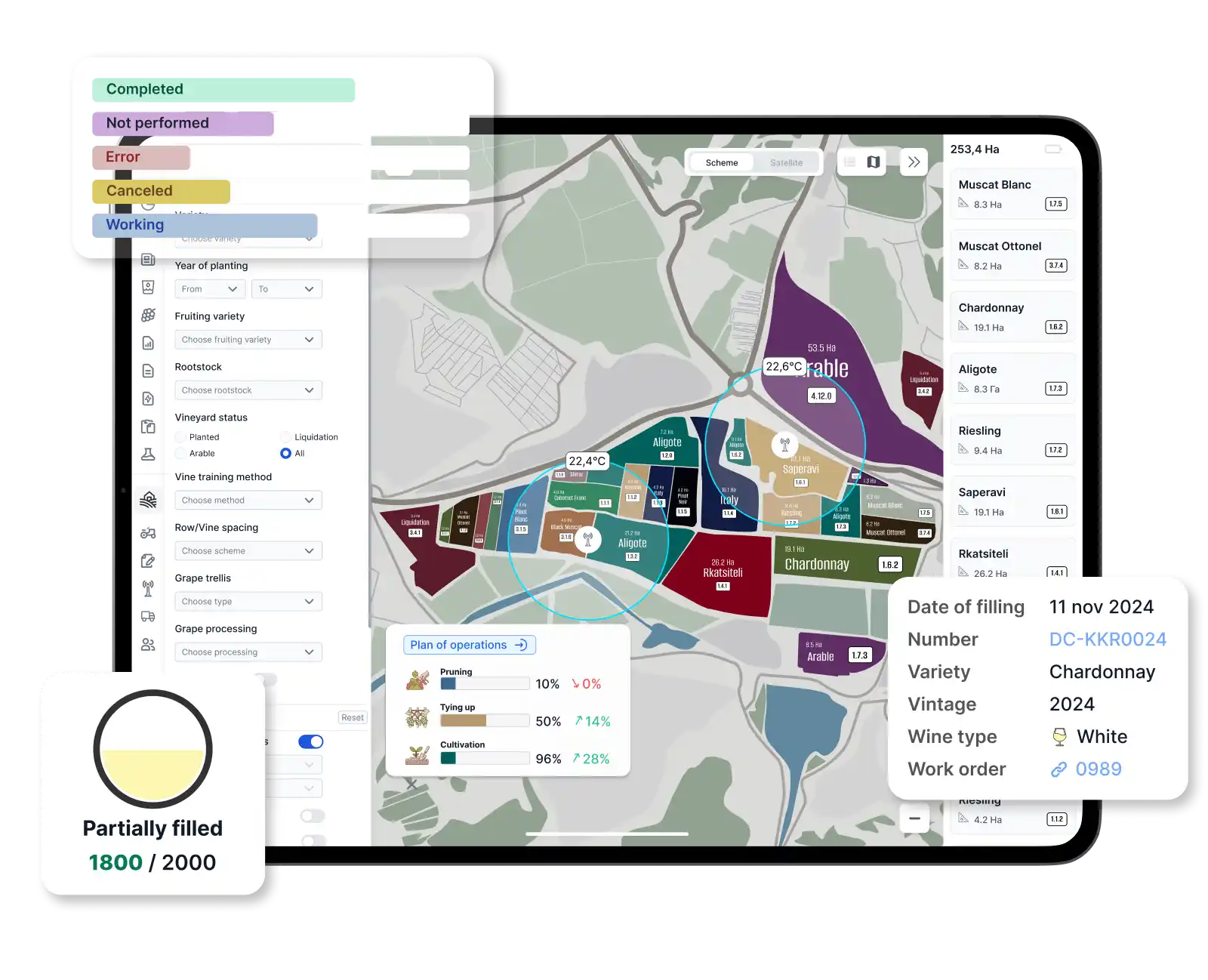
Result. Every tank, test, and task is visible on one central dashboard, and quality control is based on data rather than manual logs.
Challenge. Several legacy Java applications built on Apache Struts, some in production for over a decade, needed an upgrade, and the manual route was slow.
Solution. A two-week proof of concept that used GitHub Copilot to automate the replacement of outdated Struts tags in JSP pages, followed by steps for scaling the approach to the client’s other applications.
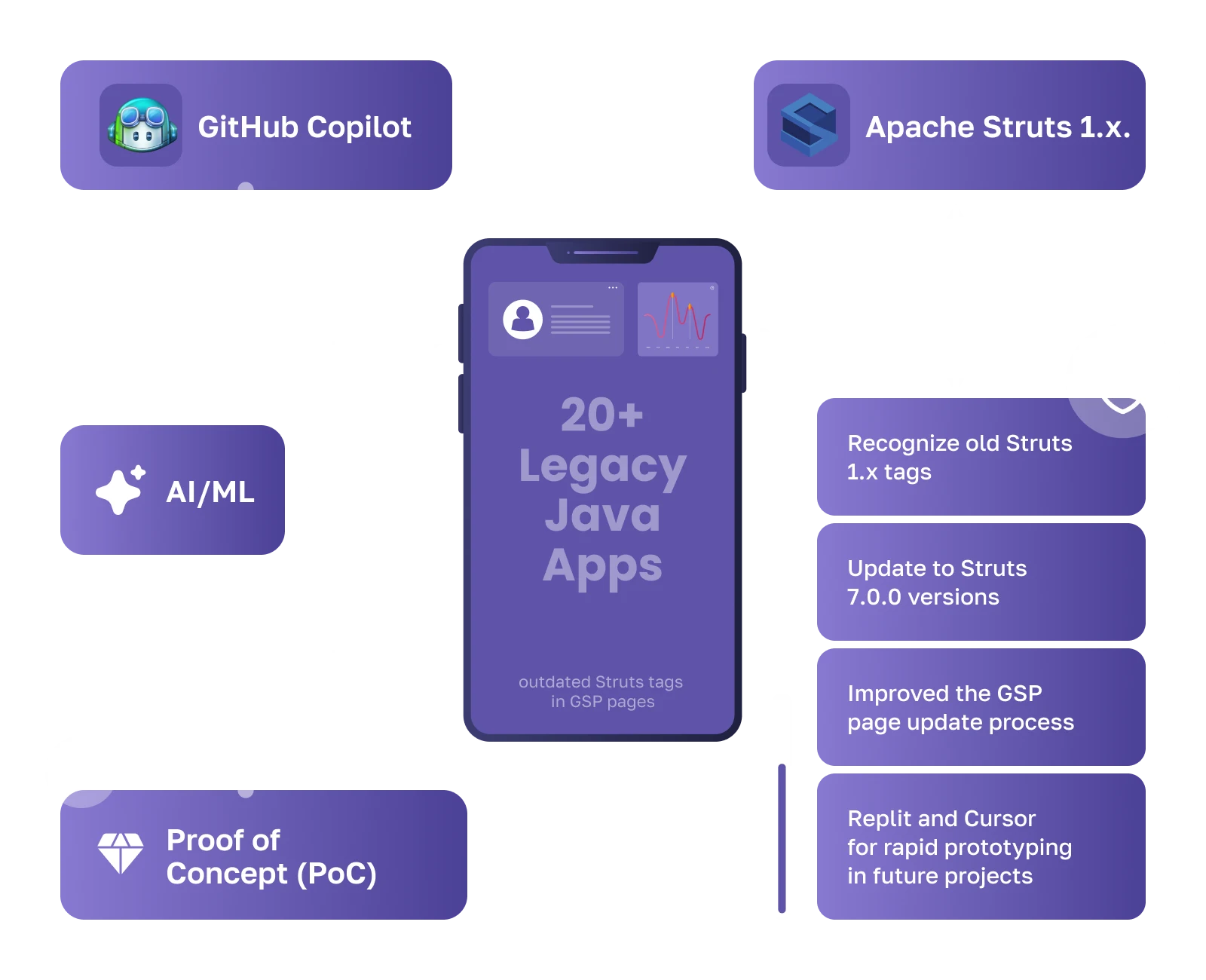
Result. The client’s team used GitHub Copilot to automate upgrades of other applications, reducing manual effort by about 70%.
Challenge. Turning a client’s identification API into a tool that a police officer can use during a live investigation.
Solution. JetRuby designed and built a web platform on top of the client’s identification API: an officer builds a case file, uploads photos or crime video, and receives a list of possible matches.
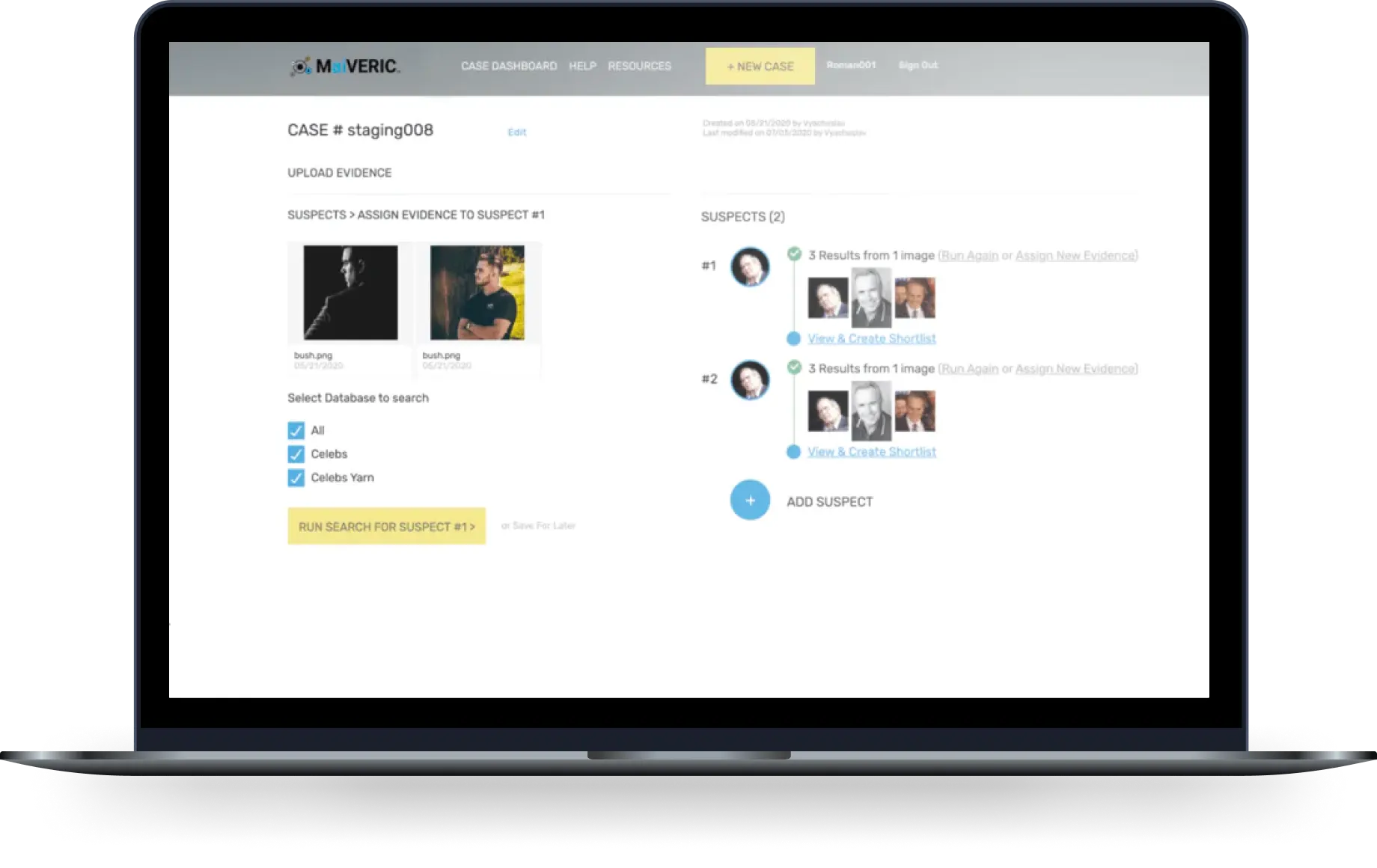
Result. The platform is in use by 5 police departments.
“All developers have been self-directed, thoughtful about technology, and make good tradeoffs.”
“JetRuby stepped into the fire with us, mid-concept, and treated our product like their own. They helped us refactor our entire agent orchestration system, rewrote our task runner in a way that could handle parallel workflows with dynamic priorities, and built a new doc context layer that allowed agents to ‘think’ with reference to actual user data in real time.”
Why JetRuby
We cover discovery, design, engineering, integration, evaluation, deployment, and support in one delivery model, so you work with one AI software development company from idea to production.
JetRuby.Flow, our lean AI-boosted delivery framework, integrates AI assistants for code generation, test automation, security scans, and predictive monitoring.
As a custom AI development company, we start from the systems you already run. We add AI within your architecture, data access, and security constraints and release it in stages, with rollback defined in advance.
Senior engineers retain responsibility for architecture, technical decisions, and final outcomes. Our AI workflows include human review points, so a person approves outcomes where a decision matters.
Security and reliability are addressed at the product, application, data, and model layers, with automated testing and evaluation sets for model behavior.
We maintain applications, data pipelines, and models, and improve the product using real usage data. Production monitoring continues after launch.
JetRuby has helped 250+ businesses launch products, from healthcare platforms to fintech and agritech solutions. In our AI work, that includes 40 enterprise applications modernized for a Fortune 500 insurer.
Technology
We choose the stack for each product by security, latency, cost, and scalability, not from a fixed list of favorite tools.

Engagement
JetRuby owns delivery from discovery to production and support.
Best when you need a complete product and one accountable team.
Add AI and engineering capacity to your team.
Best when your team owns the product direction and needs more execution power.
Ownership, decision rights, and responsibilities are agreed before the engagement starts.
FAQ
An AI product development company turns a business use case into production-ready software that uses artificial intelligence. The work can include product discovery, data and feasibility assessment, prototyping, UX and architecture, model or LLM integration, software engineering, testing, deployment, monitoring, and ongoing improvement. The exact scope depends on whether you are building a new product or adding AI capabilities to an existing system.
JetRuby can develop AI-enabled web, mobile, SaaS, and enterprise products, including copilots, knowledge assistants, retrieval-augmented generation systems, workflow agents, and document-processing tools. We define the solution around the business workflow, available data, required integrations, security constraints, and measurable product outcomes.
Yes. We can integrate AI capabilities into an existing application through APIs, model services, retrieval pipelines, workflow orchestration, and new user interfaces. Before implementation, we assess the current architecture, data access, performance and security constraints, and failure-handling requirements. We can then release the feature in stages, monitor it in production, and improve it using real usage data.
The engagement may cover use-case definition, feasibility and data assessment, a proof of concept or MVP, product design, architecture, AI and software engineering, integrations, evaluation and quality assurance, cloud deployment, observability, model monitoring, and post-launch support. We agree on the required stages and deliverables before development so the scope matches the product’s maturity and risk profile.
We start by defining the user problem, business outcome, acceptance criteria, data requirements, and operational constraints. A focused prototype or proof of concept can then test the most uncertain assumptions, such as output quality, latency, integration feasibility, and unit economics. The findings are used to decide whether to proceed, adjust the approach, or reduce the scope before a larger production investment.
Data requirements depend on the use case and the selected approach. Some products can use established models with controlled access to company documents or APIs, while others require labeled historical data or domain-specific training examples. We assess data quality, permissions, privacy, coverage, and update frequency, then design the pipeline and evaluation set needed for reliable development and operation.
Security and reliability are addressed at the product, application, data, and model layers. Depending on the system, this can include access controls, encryption, data-isolation rules, audit logging, output validation, human review, automated testing, fallback behavior, rate and cost controls, and production monitoring. Requirements are defined against the client’s risk profile and applicable policies rather than treated as a final launch checklist.
The timeline depends on the product scope, data readiness, model approach, number of integrations, UX complexity, security requirements, and the level of production hardening. A focused validation phase is usually shorter than a full product build, but it should still test the highest-risk assumptions. After reviewing the use case and existing systems, we provide a phased plan with milestones and dependencies.
Cost depends on the same factors that shape the delivery plan: product scope, data preparation, model usage or customization, integrations, infrastructure, evaluation, security, and support requirements. We estimate the work after clarifying the use case and technical constraints. Starting with a clearly scoped prototype can reduce uncertainty before committing to a larger production build.
Yes. Post-launch work can include application support, infrastructure and model monitoring, quality evaluation, incident response, performance and cost optimization, data-pipeline maintenance, and iterative product improvements. The support model is defined for the specific system because AI behavior, source data, dependencies, and user needs can change after release.
Tell us about your AI product or the AI feature you want to add to your existing software. We will review your use case, data, integrations, and the next step.

We use cookies to make Jetruby better. By clicking "Accept cookies", you agree to the storing of cookies on your device to enhance site navigation, analyze site usage, and assist in our marketing efforts. OK, I want to read more