Software Engineering Culture and How we in JetRuby Develop It
Have you ever wondered what a software engineering culture is? What if we revealed that it’s one of the primary reasons your clients come back and choose your…

Table of Contents
Have you ever wondered what a software engineering culture is? What if we revealed that it’s one of the primary reasons your clients come back and choose your product over the product of your rivals?
Software engineering culture has always been one of JetRuby’s strongest sides. So let us introduce you to this phenomenon and explain its importance for your business.
Why software engineering culture
Software engineering culture is a set of values and internal rules that guide a person during work. It stimulates them to act a certain way and feel responsible for the result. Now, let’s find out why it matters to any company.
We are eager to tell you about the notion that drives many successful businesses forward. This is the notion of core customer values. It’s why a potential customer reaches out to their favorite company. Customer loyalty is paramount; all businesses want to be chosen again and again. So, let’s refer to some real-life examples to better grasp the concept of core customer values.
You have all heard about companies like Apple, Samsung, and Xiaomi. Maybe you even use their products, too. So, what are their core customer values?
- For Apple, it’s quality, convenience, and, in some cases, even status.
- For Xiaomi, it’s affordability.
- For Samsung, it’s technological efficiency and a large variety of products for any budget.
For JetRuby, our core customer values lie in our expertise and a high level of software engineering culture.
Software engineering culture composition
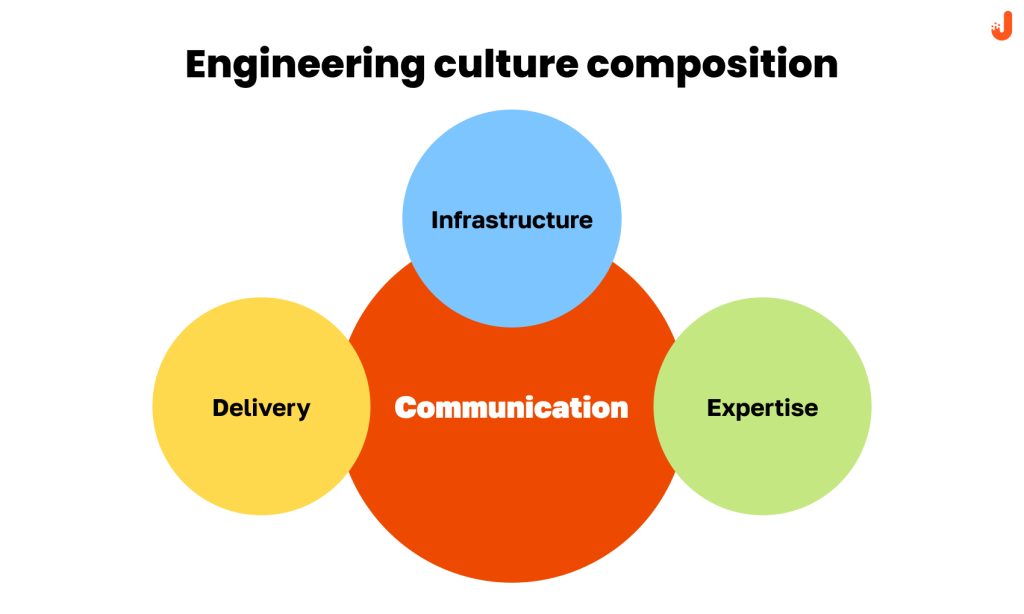
The role of delivery in software engineering culture
First, let’s discuss the application of project management methodology in practice. Here are some of the most important frameworks:
- Scrum
- Waterfall
- Kanban
- Scrumban
- Prince2
- Lean
Every single member of the software development team must understand the methodology applied to a particular project. Nobody’s perfect, and there have been instances where some software companies didn’t fully grasp the concept of Standups, resulting in excessively lengthy meetings. Some other companies never figured out the definition of ready and definition of done.
The delivery process comprises the following elements:
- Tools (CI, CD)
- Metrics (T2S, T2D)
- Areas of responsibility (development stages, key roles)
- Risks
- Unit tests
Components of Quality Assurance:
- Percentage of test coverage
- Metrics (number of bugs per User Story, bug rediscoveries, number of bugs per sprint, etc.)
- Conditions for build/release (what is being built, what should be implemented, what tests to launch, etc.)
- Review
- Style guides
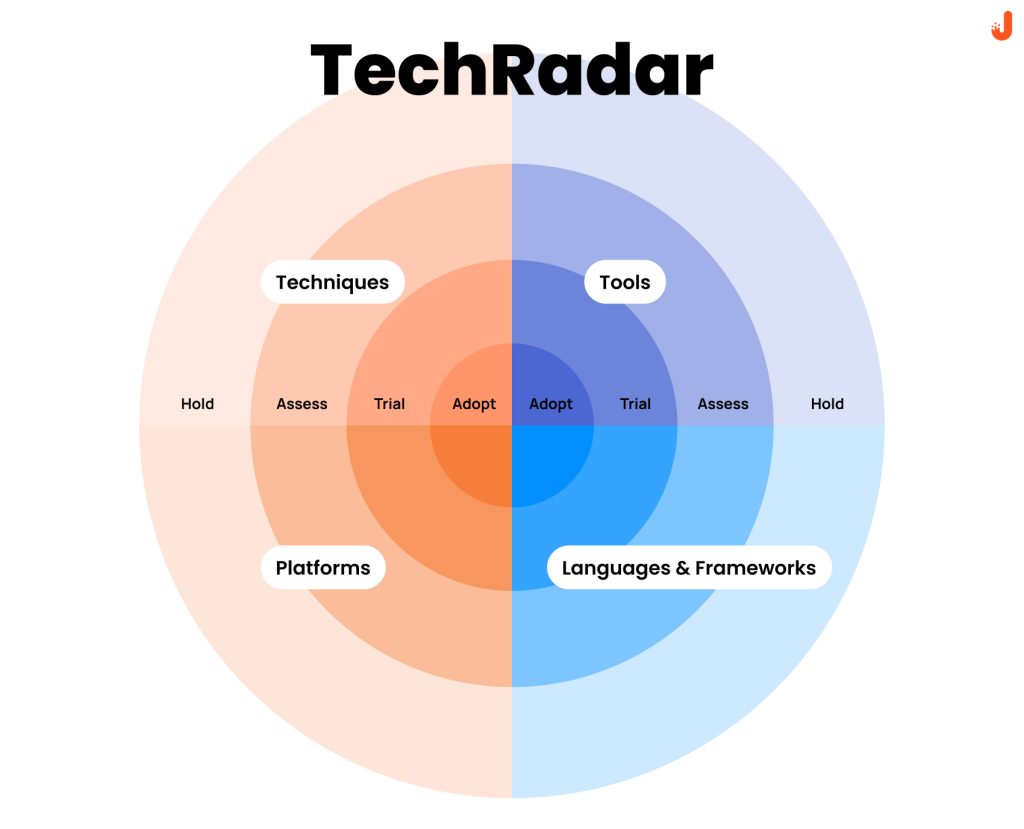
Some companies use TechRadar. This tool enables monitoring of the languages, databases, and libraries utilized, along with their versions. Most importantly, it showcases the software company’s plans to engage with the selected tools and effectively manage their integration and updates.
Let’s also touch on the product debt. A simple example of such a debt is a lack of documentation, which can create obstacles in onboarding processes, complicating inspections and ultimately delaying the product’s time-to-market.
So, how do we in JetRuby tackle technical debts? It may not be obvious, but the key person to reveal such debts is a Business Analyst. Typically, technical debts arise when there are changes in functional (or non-functional) requirements. Prompt action is the best way to follow when a debt is revealed.
The role of expertise in software engineering culture
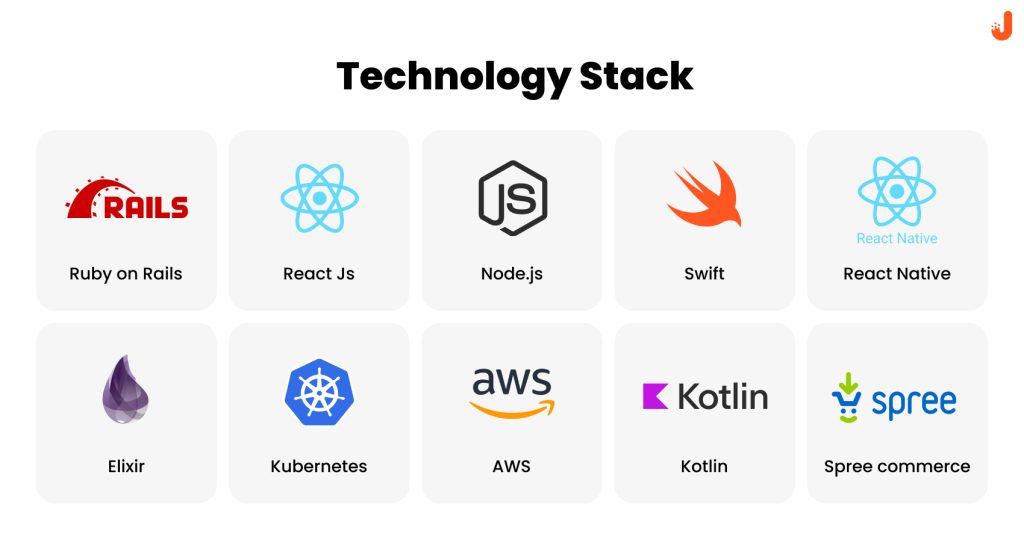
Our expertise covers the following stacks:
Beyond stacks, it is advised to focus on these areas of technological expertise:
- Architectural approaches and patterns
- Research & Development
The role of infrastructure in software engineering culture
- Project infrastructure ( e.g., the requirements for acquiring new resources, such as an auto-test server).
- Internal infrastructure pertains to the company’s internal systems and processes.
- Infosecurity focuses on guidelines for handling files, including saving, sending, or publishing on platforms like Git.
- Support and maintenance detail the organization’s responsibilities and levels of support management.


